Durham Pool Service & Construction
Why Pool Water Turns Green in North Carolina
Why Pool Water Turns Green in North Carolina
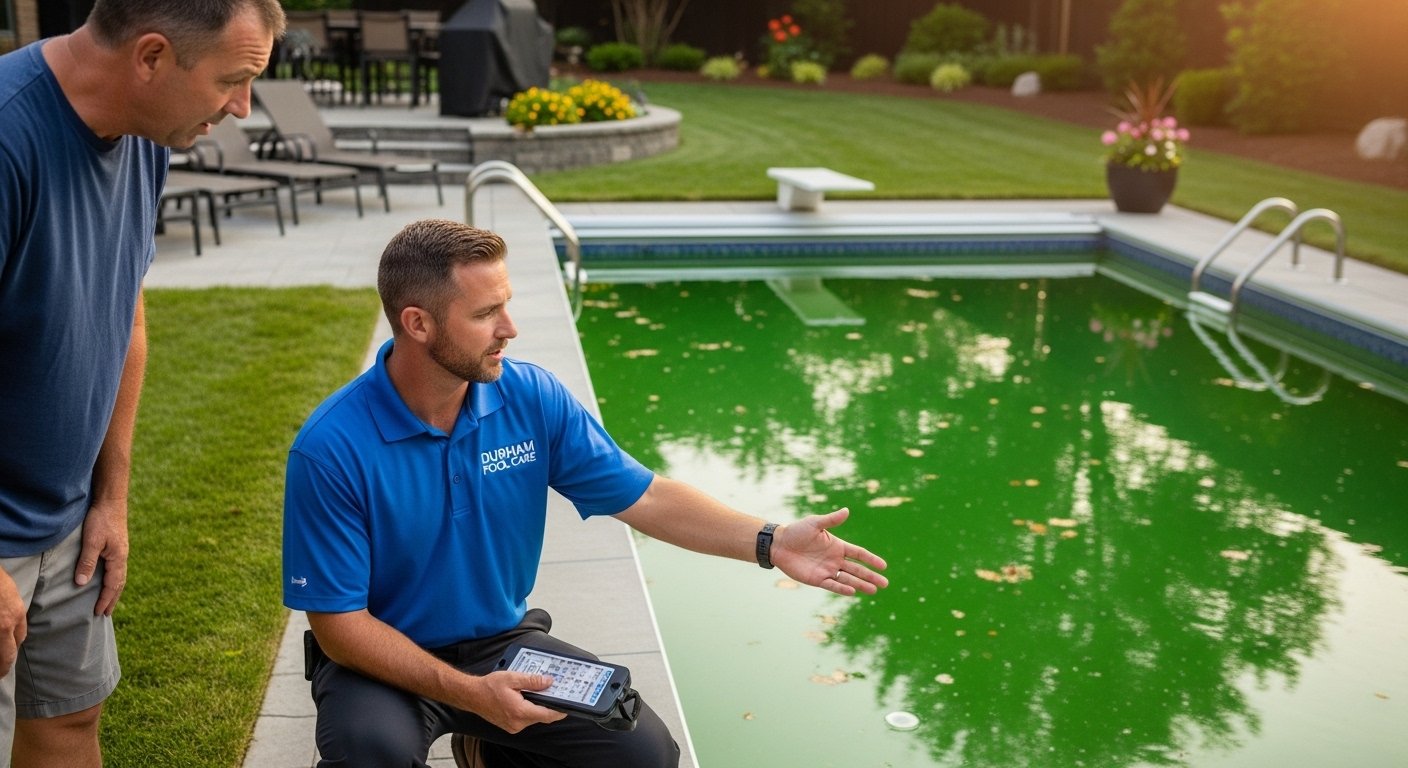
Green pool water in North Carolina usually means algae found a way to get ahead of the sanitizer. That sounds simple, but the real reason is almost always a combination of heat, debris, weak circulation, and delayed correction. In Durham, homeowners often see the issue after spring opening, after a stretch of storms, or after a busy week when the pool did not get the normal attention it needed.
Warm Water Changes the Pace
Once water temperatures climb, chlorine gets used faster and algae becomes more aggressive. A pool that looked acceptable a few days ago can swing quickly if sanitizer was already low. That is one reason many owners are surprised by how fast the color change happens in late spring and summer.
Pollen, Leaves, and Organic Debris Add Pressure
North Carolina pools do not just fight sunlight. They also fight a constant stream of organic material. Durham pollen season is a major example. The debris may look cosmetic on the surface, but it places extra demand on the water and filter. When baskets stay full or brushing gets skipped, algae has an easier place to start.
Filtration Problems Hide Behind the Color
Homeowners often respond to green water with chemicals first. That can help, but not if the pool is barely circulating. A pump that is losing prime, a filter that is overloaded, or weak return flow can all make algae recovery much slower. If the system is not moving water correctly, treatment can feel expensive without producing lasting results.
Opening Late Makes the Problem Worse
Another common pattern is waiting too long to open the pool. Once the water warms under a cover, the pool has more time to drift before the season even starts. An early opening is often easier and cheaper than trying to recover a pool that sat too long in spring conditions.
What the Fix Usually Involves
The right solution depends on how severe the bloom is. Light green water may respond to targeted cleaning, better filtration, and water balancing. Dark green or swampy conditions usually need a more involved cleanup, repeated filtration cycles, and sometimes repair work if the equipment is part of the problem.
How to Reduce the Chances of It Coming Back
The best prevention is consistent maintenance. That includes testing the water on schedule, emptying baskets before they affect flow, brushing walls and steps, and paying attention to early warning signs like dull water or shady areas that feel slick before the rest of the pool changes color.
When the water is already green, the goal is to solve the reason it turned, not only the appearance. That is how Durham homeowners keep a one-time cleanup from turning into a repeating summer problem.
FAQs
Is green water always algae?
Usually, but metals and other water issues can also tint water. Algae is still the most common cause.
Can bad filtration slow recovery?
Yes. Even good chemistry struggles when the pool is not circulating well.
What pages should I read next?
Start with pool cleaning and pool maintenance if your water is already changing.